
November 26, 2026
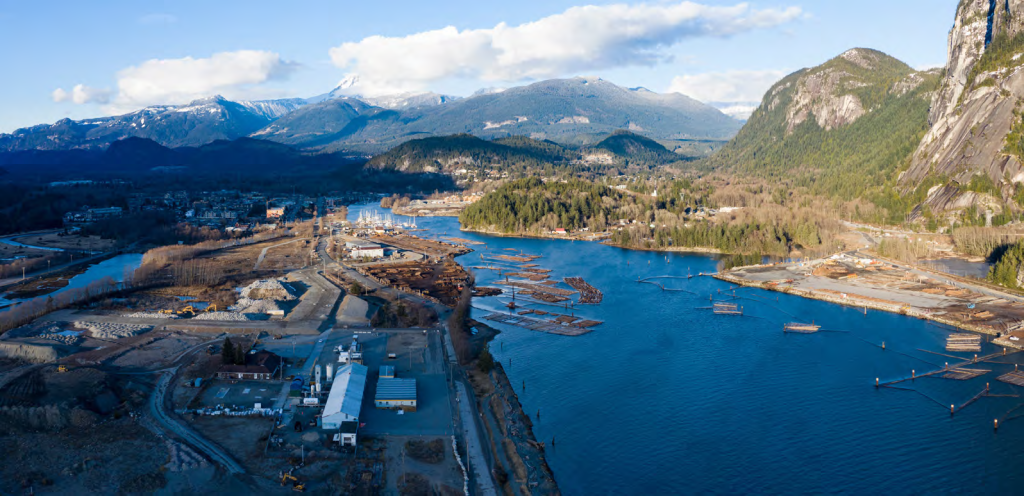
THE HOWE SOUND PULP AND Paper mill in Port Mellon, B.C., will reopen following spring announcements of plans for permanent closure.
Howe Sound Pulp and Paper was one of two shuttered B.C. mills owned by the Domtar Corporation, alongside Crofton Mill on Vancouver Island. After running for more than 70 years, the Crofton Mill has not yet announced plans for reopening, resulting in an estimated 350 direct job losses.
But the reverberations of these closures can be felt far beyond the direct impact on mill employees alone.
According to Al Phillips, president of BC Building Trades, “When a pulp mill shuts down, it hurts the workers at the mill, but the damage stretches much further than that,” he said, emphasizing that building trades members have depended on the forest industry for generations.
“We perform shutdown, maintenance and repair work, and every closure means another significant piece of that work is gone.”
Unionized trades workers such as boilermakers, pipefitters, millwrights, ironworkers, electricians and bricklayers all perform regular, planned shutdown and maintenance work at pulp and paper mills across the country.
BC Building Trades estimates that before the reopening of the Howe Sound mill, these two mill closures amounted to more than 60,000 hours of work for boilermakers alone, with the Crofton closure contributing to a loss of nearly 30,000 hours in 2027.
“[These closures] severely affect the economy,” said Geoff Higginson, president of the IUBAC Local 2, which represents brick masons, tilesetters, and refractory brick layers, among others. “They’re good-paying jobs and people have families to care for.”
For bricklayers, Higginson said, there are a few times when his workers are called in to work at a paper-and-pulp mill. First, during the initial construction of the plant, and again during ongoing maintenance of items like industrial vessels and kilns.
“For us, mainly the losses are in the maintenance work,” he added, noting that many of his workers will now have to travel, some as far as Alberta, to make up for those losses.
With workers no longer stationed in these smaller communities, Higginson said that local economies will take a significant hit. “When these mills are open, or when we do [a scheduled] shutdown, that town fills up with workers,” he said. “[Some of] those people are staying in hotels and bed and breakfasts. All that money gets dumped into the local economy.”
North Cowichan Mayor Rob Douglas told the CBC that the mill closure will be “devastating” for his community. In addition to the trades workers and local businesses that depended on the mill, the site generated around $5 million in property taxes each year.
When asked his thoughts on the reopening of the Howe Sound Mill, Higginson said: “I hope [the province] will find a way to reopen the mill in [Port Mellon] as well… if we want our province to be successful… people need not to have to worry about whether they can pay their mortgage when it’s due.”
Phillips hopes to see continued provincial investment in local industry. “B.C. needs a highly-skilled trades workforce. But we also need the investments and the industrial projects that will keep those people working,” he said.
“If we lose mills and other major projects without replacing the associated jobs, we cannot expect to maintain the skilled workforce required to build this province.”
by Maddi Dellplain